
At about 3:30 in the morning, a woman in her eighties woke up and started talking. She talked about her own life, in full sentences, for roughly four hours. For the five years before that night she had spoken almost entirely in single syllables.
Nineteen hours earlier, in a supervised session, she had been given five grams of Enigma mushrooms. She has advanced Alzheimer’s disease. The account was published on May 28, 2026 in Frontiers in Neuroscience, a peer-reviewed journal. By late June it had been through the New York Post, Vice and a long tail of aggregators, and at least one outlet was calling it a breakthrough.
It isn’t one. It also isn’t nothing. This is what the paper actually says, what its own authors say it doesn’t show, and why we — a company that sells Enigma when we can get it — are telling you not to try this.
The short version
- One patient. No control group, no brain scans, no memory tests. A case report is a doctor’s account of what happened, not a trial.
- The dose was 5 grams of Enigma — a lot of a strong mushroom. (You may have heard 4. It was 5, then 3 a month later.)
- Speech came back about 19 hours in. Walking, dressing herself and staying dry followed over the next few days. A month later, some of it was still there.
- The authors’ own word for the improvement is “transient.” Their own sentence: it “should not be interpreted as reversal of Alzheimer’s pathology.”
Who she is
The paper gives her no name. She is described as a Japanese-American woman in her eighties, diagnosed with Alzheimer’s about ten years before any of this. (The diagnosis was clinical — made from her symptoms, without the lab markers or scans that would confirm it. The authors say plainly that a mixed or vascular dementia can’t be ruled out.)
By the last five years the disease had taken most of what a person does in a day. She spoke in monosyllables. She couldn’t walk without help. She had trouble swallowing. She had worn diapers for about five years. Her face had gone flat, and she slept much of the time. Family and caregivers watched her around the clock.
Five grams
The session itself gets a few lines. A single dose by mouth: five grams of Enigma. The paper doesn’t say how it was prepared, and nobody measured how much of the active compound was in it. The authors call the dose “relatively high” next to what modern trials use, and say it was chosen from “prior experiential observations.” They add, correctly, that no dosing framework for advanced dementia exists. Nobody has written one because nobody has tested one.
(This story often gets retold with four grams. The paper says five for the first session and three for the second.)
The strain matters. Enigma isn’t an ordinary mushroom; it’s a mutation that grows as a dense blob instead of a cap and a stem, and in open lab competitions it tests in the same top bracket as Penis Envy. Gram for gram it can carry a good deal more than a standard strain. On our own Enigma dose chart, the last row — “3 g and up” — doesn’t describe an experience at all. It just says: not where anyone should start. This was five, in a woman in her eighties who could not walk unaided or tell anyone how she felt.
The first twelve hours
The part the headlines skip is the first half-day. By the paper’s own timeline she ran hot — “clinically suspected hyperthermia” — sweated heavily, and dropped into what the authors call a prolonged, deep, sleep-like state. Nobody recorded her temperature; the paper says exact measurements “were not available.” No pulse or blood-pressure numbers appear anywhere in it either.
Read that as a relative instead of a reader: an elderly woman who can’t swallow well and can’t speak, overheating and deeply asleep for hours, with no thermometer reading in the record. It ended well. That is not the same thing as safe.
Rahul Sidhu, a neuroscience researcher at the University of Sheffield who reviewed the case for The Conversation, put it in one line: “The absence of lasting complications does not establish that the approach is safe.”
Hour nineteen
Then she woke up. This is the paper’s timeline, in plain words.
Hours 0–12
Suspected overheating, heavy sweating, a long deep sleep.
Hour 19 — 3:30 a.m.
She wakes on her own and talks about her life for about four hours.
Day 1
More alert. Recognizes her family.
Day 2
Walks without help.
Days 2–3
Dresses herself. Starts doing things unprompted. Dry diapers, including overnight.
Days 6–7
Asks, “Where did Celso go?” Correctly recognizes a vehicle. Holds eye contact and smiles back.
One month
Still continent and still doing more than before. A second session, at three grams.
The detail that stops people is the question on day six: “Where did Celso go?” The paper doesn’t say who Celso is. It doesn’t need to. To ask where someone went, you have to have noticed he was there, held onto it after he left, and wanted to know. The paper calls that working memory. It is also simply a person wondering about another person.
A month after the first session she was still dry and still functioning better than her baseline. The authors write that “several clinically meaningful improvements persisted for weeks.” Then the record stops. There is no follow-up past roughly one month, and although the paper’s own title calls the improvement transient, it never says when she slipped back, or how far.
The island
One month on, they did it again, this time with three grams. She was more talkative all the way through. Her face moved. She made jokes. Afterward she was quicker on her feet. And at some point she described what she was seeing: she was surfing with her son, on a peaceful island.
The paper files that under “emotionally valenced autobiographical imagery.” We’d put it differently. A woman who could barely speak a month earlier told the people in the room that she was out on the water with her kid. Whether it was a memory or a wish, the paper doesn’t say, and it doesn’t change what it would be to hear it. At a follow-up visit she said one more sentence the authors thought worth writing down: “It is pleasant to come here.”
What the paper doesn’t claim
| What you’ll hear | What the paper says | |
|---|---|---|
| The result | Mushrooms reversed Alzheimer’s. | A transient improvement in one patient. Not a reversal — the authors say so in those words. |
| The proof | A study showed it works. | One case. No control, no standardized memory or function scores, no scans, no sleep or brain-wave recordings. |
| The cause | The mushrooms did it. | Causality “cannot be established.” Dementia fluctuates on its own, and they can’t rule that out. |
| The safety | She was fine, so it’s safe. | No lasting harm was seen in one person, whose temperature was never recorded. |
To their credit, the authors wrote most of those caveats themselves. The lead author, Marcos Lago, told Futurism: “This was a single case report in a patient with advanced Alzheimer’s disease, and the observed improvements were transient.” He said the paper doesn’t claim to reverse the disease and shouldn’t be used as a protocol by anyone on their own.
What they do claim is narrower and, honestly, more interesting: that “latent functional capacities may persist in advanced neurodegeneration.” In plain words, the wiring for speech, for walking, for staying dry may not be gone. It may be there and out of reach, and for a few weeks something reached it.
What the coverage left out
A few things about how this was done deserve to be said out loud, because most of the headlines didn’t.
- She couldn’t say yes. By the paper’s own description she was in no condition to weigh a decision like this one. Written consent came from her legal guardian, which is how consent works for someone who can’t give it. It also means the person who took the risk had no say in it.
- No ethics board reviewed it. The paper states that ethical approval “was not required” because this was a single case in routine private practice.
- The authors list one affiliation: the medical department of Associação Cruz de Ankh, in São Paulo. Futurism went looking and reported that it appears to be a philosophical or religious organization rather than a hospital or a university.
- Everything in it is observation. No test scores, no instruments, no outside examiner. The only way to check it is to do it again, properly.
None of that means it didn’t happen. It means the right answer to this paper is a real study, with an ethics board, a thermometer and a control group. Not a kitchen table.
An old idea with a new mushroom on it
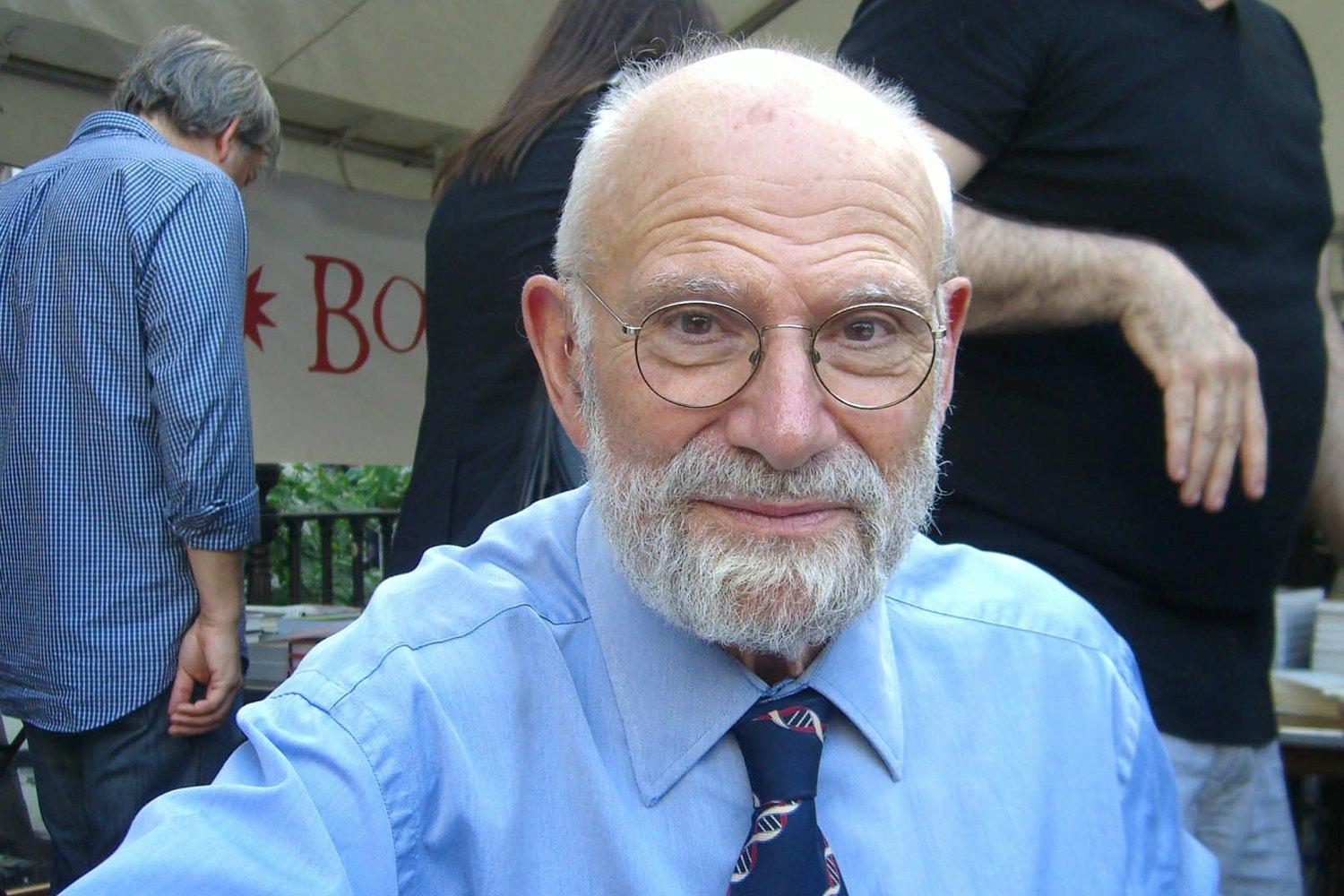
The idea that the person is still in there is much older than this paper. In 1969, at a hospital in the Bronx, a neurologist named Oliver Sacks gave a new drug called L-dopa to patients who had been frozen for decades, survivors of the sleeping-sickness epidemic that followed the First World War. They woke up. They talked, they walked, they asked what they had missed. He wrote it down in a book called Awakenings. (Different disease, different drug. The comparison is about what it looked like, not how it worked — and it’s Sidhu’s, not ours.)
The part of Awakenings people forget is the second half. For most of those patients it didn’t hold. The drug that woke them brought tics, frenzies and crashes, and many of them sank back. The lesson Sacks took from it wasn’t about the drug. It was that the person had been there the whole time.
People who work with the dying have their own version. It’s called paradoxical lucidity: someone with severe dementia who suddenly, briefly, is themselves again — recognizing a daughter, telling an old story — sometimes in the last days of life. For a long time it was hospice folklore. In 2018 the National Institute on Aging convened a workshop on it, and in 2019 a group of researchers argued in the journal Alzheimer’s & Dementia that it could be “a potential paradigm shift” in how severe dementia is understood. Early results from a study led out of NYU Langone, following 151 people with moderate to severe dementia near the end of life, recorded lucid episodes in 93 of them. (That one is a conference abstract, not a finished paper.)
So the surprising thing in this report isn’t that a person with advanced dementia had a window. That happens, more often than anyone used to think, and nobody knows why. The surprising thing is the possibility that a window could be opened on purpose and held for days. The paper never mentions paradoxical lucidity, which is an odd thing to leave out: it’s the most obvious other explanation for what her family saw.
Dustin Hines, who studies this at the University of Nevada, Las Vegas, gave Medical News Today the hopeful version: “In Alzheimer’s, some neural circuits may be impaired but not completely destroyed.” He was careful to call that a hypothesis. He was blunt about the rest: “The key word is ‘temporarily.’ This is a single case report, not proof of Alzheimer’s reversal.”
Where the real research is
If this turns into anything, it will be through the slow door — the one The Gap is about. A little of that work exists already.
- Johns Hopkins has a small pilot of the mushroom compound for depression in people with mild cognitive impairment or early Alzheimer’s: up to 20 participants, two supervised sessions, months of follow-up. It is still enrolling and has published no results. Note what it tests — mood, in early disease. Not memory, and not anyone as far along as the woman in this report.
- UC Berkeley has been studying the compound in cognitively healthy adults aged 60 to 85. That is the groundwork that has to exist before anyone gives it to an 85-year-old on purpose.
- As far as we can find, nobody has run a controlled trial in advanced dementia. On that question, this one report is close to the entire published record.
Why we care
We sell mushrooms. A story like this one is very good for people who sell mushrooms, which is exactly why you should hear the careful version from us. We’re a delivery service, not a clinic, and nothing on our menu is a treatment for Alzheimer’s or for anything else.
If someone you love has dementia, we know what this story does to you. It did it to us. Please listen to the researchers, because they agree. Hines: “Do not try this at home on yourself or a loved one with dementia.” Sidhu: it would be “dangerous to interpret the report as a reason to experiment with psychedelic mushrooms.” The risks they list are not exotic — a fall, choking, delirium, panic, a strained heart, a bad interaction with a medication she already takes. A person with advanced dementia can’t tell you she’s frightened, can’t tell you she’s too hot, and can’t ask you to make it stop.
What we’d keep from this paper isn’t a protocol. It’s the sentence about latent capacity — the chance that in a person who has gone quiet, more is intact than anyone can see from the outside. You don’t need a mushroom to act on that. Talk to her like she’s in there. Play the record. Tell her who came by today, and where he went. At least one woman wanted to know.
What Enigma is
The blob mutation at the center of this story, and why our own dose chart stops where it does.
Read it →
This Is Your Brain on Mushrooms
What brain scans actually show — the science people reach for when they read a case like this.
Read it →
The Gap
Why a question this big is being answered by one case report instead of fifty years of trials.
Read it →
The Rules We Actually Mean
Our safety page, including who should sit this one out.
Read it →
Was it 4 grams or 5 grams?
Five grams of Enigma in the first session, and three grams in a second session one month later. The four-gram figure that gets repeated isn’t in the paper.
Did mushrooms cure or reverse her Alzheimer’s?
No. The authors call the improvement “transient” and write that the findings “should not be interpreted as reversal of Alzheimer’s pathology.” Nothing in the report measures the disease itself.
How long did the improvement last?
Speech returned about 19 hours after the dose; walking, dressing and continence over the following days. One month later she was still continent and functioning better than before. The paper reports nothing after that.
Should I give mushrooms to a family member with dementia?
No. Every researcher quoted on this case says the same thing. Older and frail people face real risks — falls, choking, delirium, heart strain, drug interactions — and a person with advanced dementia can’t consent or tell you something is wrong. If you want to help the science, ask their neurologist about registered clinical trials.
Why Enigma?
The paper doesn’t say. Enigma is a dense, slow-growing mutation that tests among the strongest mushrooms in lab competitions, so five grams of it is a bigger dose than five grams of a standard strain. Nobody measured what was actually in the mushrooms she was given.
Is this a real, peer-reviewed study?
It is a peer-reviewed case report in Frontiers in Neuroscience, published May 28, 2026. A case report is a written account of one patient. It is the lowest rung of clinical evidence — good for raising a question, never for answering one.
Sources
- Lago, Cerveira & Simonet (2026), Frontiers in Neuroscience — the case report itself
- The Conversation: “Magic mushrooms and Alzheimer’s: what one remarkable case can tell us” (Rahul Sidhu, June 2026)
- Medical News Today: expert reaction, including Dustin Hines (June 2026)
- Futurism: the lead author’s response, and questions about the affiliation (June 2026)
- Medical Xpress: summary of the report (June 2026)
- Vice: coverage of the case (June 2026)
- Mashour et al. (2019), Alzheimer’s & Dementia — “Paradoxical lucidity: A potential paradigm shift for the neurobiology and treatment of severe dementias”
- A multi-site prospective study of paradoxical lucidity in moderate to severe dementia (NYU Langone and colleagues, 2025 abstract)
- ClinicalTrials.gov NCT04123314 — the Johns Hopkins pilot in mild cognitive impairment and early Alzheimer’s
- Oliver Sacks, Awakenings (1973) — background
- Header photo: “241/365 – 6/6/2011” by GabrielaP93, CC BY 2.0
Ready to explore?
Find your perfect product.
Browse our full lineup of gummies, chocolates, teas, and softgels — all precisely dosed and delivered same-day in San Diego.
Comments
Loading…