Every few months a headline says scientists have “discovered” that mushrooms might help with depression. They did. They also discovered it in 1962. What happened in between is the part nobody puts in the headline, and it explains almost everything about why these things still feel new, risky, or half-legal in 2026.
This is the whole arc, from a Mazatec healer in the mountains of Oaxaca to a drug application sitting at the FDA this month — with the camera zoomed in on the middle, where a generation of research simply stopped.
The short version
- 1955: a New York banker sits in a mushroom ceremony with María Sabina. Two years later it’s in LIFE magazine.
- 1960–66: Harvard, a prison, a chapel, a revolution. Then the backlash.
- 1970: Nixon signs the Controlled Substances Act. The mushroom compound goes in Schedule I. Research goes dark for roughly 25 years.
- 1990–2006: the door is pried open by paperwork, not protest — ending with the Johns Hopkins study that restarted everything.
Interactive timeline
Sixty years, one hole in the middle
Tap an era. The width of each block is roughly how long it lasted — the dark one is the point of this post.
1970–1990
The Gap
Two laws, one speech, and then a silence that lasted a generation. No approved human study of the mushroom compound in the United States from the mid-1970s until 2000.
20
years of the War on Drugs before the first new study
~25
years with no approved U.S. human mushroom study
0
new treatments learned in that time
Start anywhere on the timeline. The rest of this post walks it in order, and lingers on the dark block.
Before any of us: the mushrooms that never went away
In Mexico, nobody discovered mushrooms. They were there — carved into stone figures three thousand years old, described by Spanish chroniclers in the 1500s as teonanácatl, “flesh of the gods,” and then hunted by the Inquisition until the practice went quiet in the mountains of Oaxaca. It survived there, in the Mazatec Sierra, as something closer to prayer than to pharmacology: night ceremonies called veladas, led by healers, for sick people.
One of those healers was María Sabina. Born in Huautla de Jiménez in 1894, she ate the “little saints” for the first time as a child and spent her life using them to treat her neighbors. She would have stayed unknown to the rest of the world if a banker hadn’t knocked on her door.
The banker who knocked
R. Gordon Wasson was a vice president at J.P. Morgan who studied mushrooms as an obsessive hobby with his wife, Valentina. In the summer of 1955 he and a photographer, Allan Richardson, made it to Huautla and were allowed to sit in a velada with María Sabina. As far as anyone knows, they were the first outsiders ever permitted to take part.
Two years later, on May 13, 1957, his account ran in LIFE magazine as “Seeking the Magic Mushroom.” (It’s often remembered as Time. It was LIFE — the big photo weekly that reached millions of American living rooms.) A LIFE editor invented the phrase “magic mushroom” for the headline. Wasson hated it. It outlived him.
The samples Wasson’s circle sent to Europe landed with Albert Hofmann, the Swiss chemist who had discovered LSD fifteen years earlier. In 1958 Hofmann isolated the mushrooms’ active compound. His employer, Sandoz, began shipping it to researchers under the name Indocybin. In three years, a Mazatec sacrament had become a laboratory reagent with a catalog number.
What it cost her: Wasson used a false name for María Sabina in print, but the town was named, and the seekers found her anyway — hippies, celebrities, people who treated a healing ceremony like a party. Her neighbors blamed her. Her house was burned. She said later that once the foreigners came, the mushrooms “lost their purity.” She died poor in Huautla in 1985. Every time the word “magic” gets printed, it’s worth remembering whose door it was.
Harvard, a prison, and a chapel
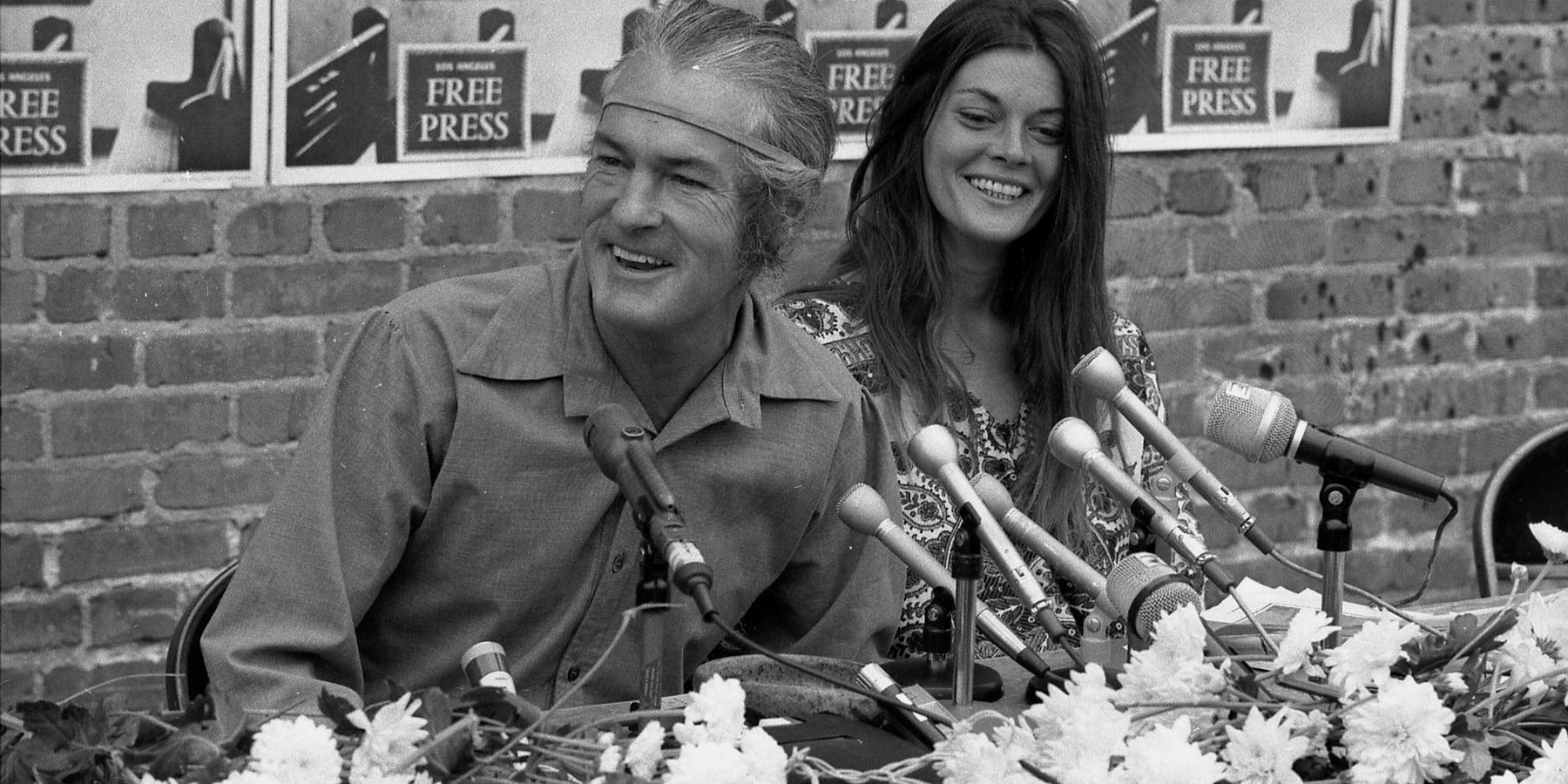
In August 1960 a Harvard psychologist named Timothy Leary ate mushrooms beside a swimming pool in Cuernavaca and came home saying he had learned more in four hours than in fifteen years of studying the mind. That fall he and his colleague Richard Alpert started the Harvard mushroom project, with a steady supply from Sandoz.
The studies people still argue about came out of those three years. In the Concord Prison Experiment (1961–63), inmates were given the mushroom compound in group sessions on the theory that it could help them stop re-offending. Leary reported dramatic results. When Rick Doblin re-ran the numbers in 1998 with the state’s own records, the effect mostly evaporated — the idea was bold, the bookkeeping wasn’t. The Good Friday Experiment (1962) held up better: divinity students given the mushroom compound before a service at Boston’s Marsh Chapel described profound religious experiences, and a 25-year follow-up found most still counted it among the high points of their lives.
By 1963 Harvard had had enough. Leary and Alpert were dismissed — the first faculty firings there in decades. Alpert went to India and came back as Ram Dass; the story of his later life is one of teaching, not of licenses. (The researcher whose DEA license actually got pulled is a different man, and we’ll get to him.) Leary went on the road.
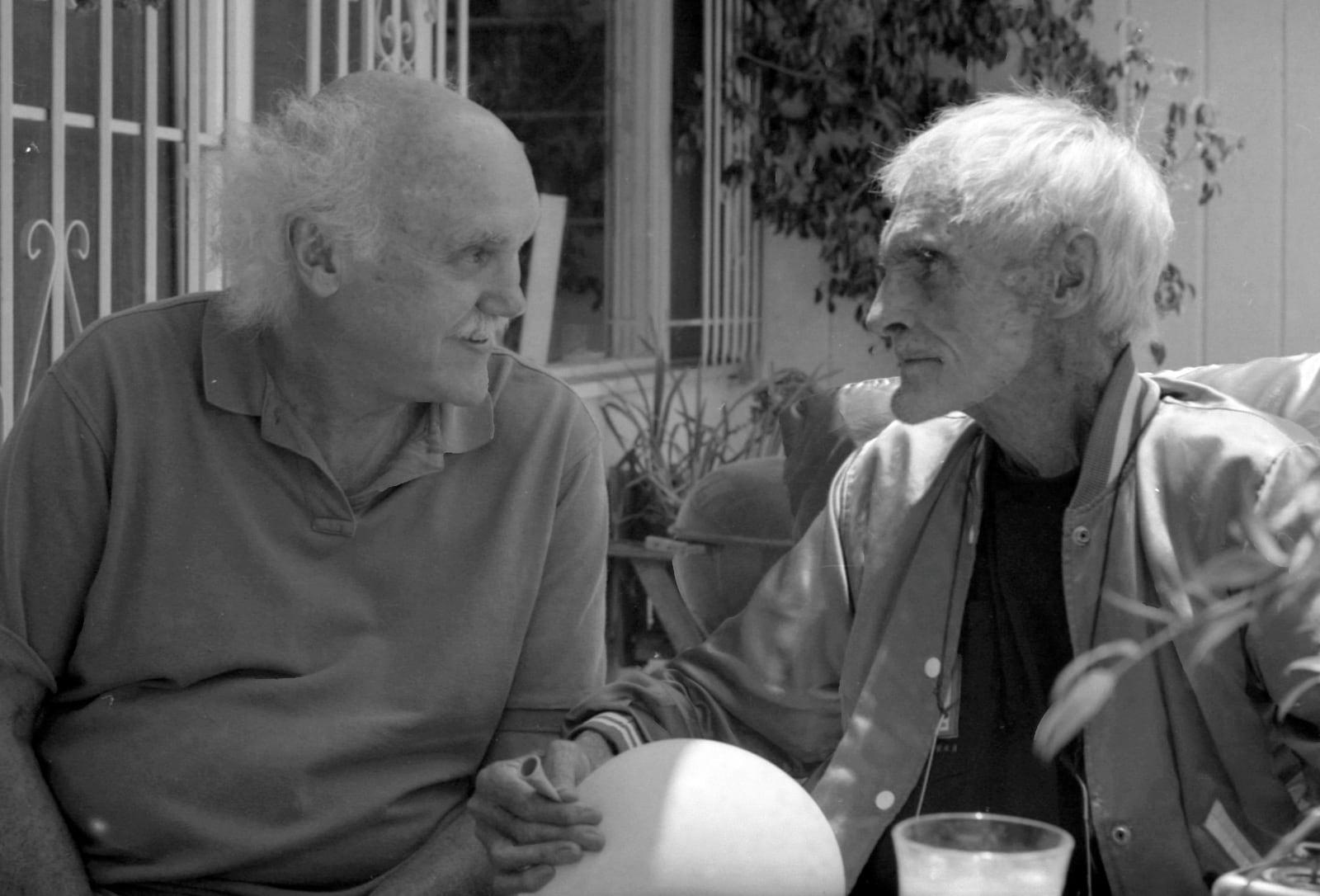
Turn on, tune in, drop out — and the backlash
The next five years are the part everyone knows: the Human Be-In, the Summer of Love, Leary on stages telling a generation to drop out. What gets lost is how quickly the science was crushed underneath the spectacle. In 1966 Sandoz, alarmed by the headlines, stopped supplying LSD and the mushroom compound to researchers — legitimate labs lost their source overnight. That October, California passed the first state ban on LSD. In 1968, simple possession became a federal crime.
None of that was aimed at hospitals or universities. All of it landed on them. The psychedelics had become the face of a movement, which made them the perfect villain for the next administration.
The Gap: what Nixon actually did (and what Reagan did later)
People mix up who started the War on Drugs. Here’s the sequence. On October 27, 1970, Richard Nixon signed the Controlled Substances Act, which created the schedules we still live under. LSD and the mushroom compound went into Schedule I: “high potential for abuse, no currently accepted medical use.” On June 17, 1971, Nixon stood in front of the press and called drug abuse “public enemy number one.” That speech is where the phrase “War on Drugs” comes from. Ronald Reagan didn’t start it — he inherited it and turned it up in the 1980s, with “Just Say No,” mandatory minimums and the 1986 Anti-Drug Abuse Act.
You’ll also read that Nixon called Leary “the most dangerous man in America.” It’s a great line, and he may well have thought it, but no one has ever found a record of him saying it. What’s documented is enough: a president who saw Leary as the poster child for everything he was running against.
Here is the thing most people miss about Schedule I: it did not make research illegal. It made it impossible in practice. A study now needed a federal license, a university willing to sign its name to it, a review board with nerve, a supplier (Sandoz was gone), and money. Grant funding evaporated. Proposing a psychedelic study became, as one historian put it, the fastest way to end an academic career. The last American program giving LSD to patients — the Maryland Psychiatric Research Center at Spring Grove — wound down in 1976.
Then nothing. From the mid-1970s until the year 2000, there was not a single approved human study of the mushroom compound in the United States. The compound Hofmann named in 1958 sat in a government box for the entire lifetime of everyone born in the 1970s and 80s.
What the gap cost
It’s tempting to measure this in studies, and the number is brutal — roughly a quarter century, zero. But the real cost was cultural. For twenty-five years the only people talking about these mushrooms in public were the ones with no credentials. A generation learned about them from folklore, from album covers, from the guy at the party — never from a doctor, because no doctor was allowed to know anything. The hippie movement became the whole story, so the backlash to the hippie movement became the whole policy.
- Therapists lost a tool they had been using with alcoholics and the dying since the 1950s, and had to pretend they hadn’t.
- The Mazatec tradition got tourism instead of respect — María Sabina’s town became a stop on the trail.
- The fear got frozen in place: Schedule I says “no accepted medical use,” and for 25 years no one was allowed to generate the evidence that would change it. The law protected its own premise.
- Almost everything the “renaissance” has found since 2006 is a careful re-run of questions first asked in the 1960s. We didn’t lose twenty years of progress. We lost twenty years and then spent twenty more getting back to the start line.
What opened the door again
There was no march, no repeal, no single law. The door was pried back open by a handful of people willing to spend years on forms.
In 1986, Rick Doblin founded MAPS to do the slow, unglamorous work of regulatory applications. In 1990 — after roughly two years of paperwork with the FDA and DEA — a psychiatrist named Rick Strassman got approval to give DMT to volunteers at the University of New Mexico. It was the first government-approved human psychedelic study in the United States in about twenty years: some 60 volunteers, around 400 doses, 1990 to 1995. The precedent mattered more than the molecule. It proved the forms could be filed and the answer could be yes.
In 1993 the Heffter Research Institute started funding mushroom research the government wouldn’t. In 1994 the DEA raided the home lab of Sasha Shulgin — the chemist behind hundreds of new compounds — fined him $25,000 and ended his Schedule I license, mostly over record-keeping and a High Times interview. That’s the lost-license story people half-remember and pin on Ram Dass; it was Shulgin, and he never got it back. The 1990s also saw Franz Vollenweider in Zurich put the mushroom compound back into scanners, which gave American researchers a safety record to point at.
Then, in 2000, Roland Griffiths at Johns Hopkins won approval to give the mushroom compound to healthy volunteers — the first such approval in the U.S. since the freeze. He said the scrutiny was unlike anything in his thirty years of human research. The study he published in August 2006 is the one everyone dates the renaissance from: double-blind, rigorous, boring in all the right ways, and the result was that a single dose produced experiences most volunteers still ranked among the most meaningful of their lives fourteen months later. Nobody could wave it off as 1960s enthusiasm. The door was open.
Where we are today
Twenty years into the second act, the map looks like this.
- Johns Hopkins opened a $17 million Center for Psychedelic and Consciousness Research in 2019 and has published well over a hundred papers — depression, smoking, end-of-life distress, healthy volunteers who simply want to be studied.
- In San Diego, UC San Diego launched its Psychedelics and Health Research Initiative in 2020 — now the Center for Psychedelic Research — with mushroom-therapy trials for treatment-resistant depression, anorexia, and a $1.3 million study of phantom-limb pain in amputees.
- In 2021, Massachusetts General Hospital — Harvard’s teaching hospital — opened the Center for the Neuroscience of Psychedelics.
- Oregon’s supervised mushroom centers opened in 2023; Colorado followed; New Mexico passed a medical mushroom law in 2025.
- The FDA granted mushroom therapy “Breakthrough Therapy” status in 2018 — and in 2024 it declined to approve MDMA-assisted therapy, a reminder that the bar is evidence, not enthusiasm.
- In April 2026 an executive order directed a federal review of rescheduling. On November 9, 2026, COMPASS Pathways completed its application to the FDA for mushroom therapy for treatment-resistant depression, with a priority review voucher. A decision could come within months.
And yet: the mushroom compound is still Schedule I, federally, today — the same box Nixon put it in fifty-six years ago. The research that was supposed to be impossible has been done; the label hasn’t caught up. If you want to be part of the research rather than read about it, the Hopkins and UCSD centers both enroll volunteers for studies — that is the “try it and be studied” path, and it’s real, if slow.
Why we care
We’re a delivery service, not a clinic, and we won’t pretend a chocolate bar is a clinical trial. But the reason a mushroom still gets a nervous laugh at dinner — the reason the word “magic” is on it at all — is the gap. Twenty-five years of silence did more to shape how people feel about these things than any study ever has. Knowing the history is the best antidote we know to the fear it left behind. Then: start low, know your route, mind your setting.
Was it Nixon or Reagan who started the War on Drugs?
Nixon. He signed the Controlled Substances Act in October 1970 and declared drug abuse “public enemy number one” in June 1971 — that speech is where the phrase comes from. Reagan escalated it in the 1980s with “Just Say No” and the 1986 Anti-Drug Abuse Act.
If research wasn’t technically banned, why did it stop?
Schedule I made it impractical: a federal license, a university willing to back it, a review board, a supplier (Sandoz had stopped) and funding — all at once, in a political climate where the subject was radioactive. Everyone who could say no, did. The last U.S. program ended in 1976.
Who really lost a DEA license?
Chemist Sasha Shulgin, after a 1994 DEA raid on his home lab. It’s often misattributed to Ram Dass (Richard Alpert), who was dismissed from Harvard in 1963 but never held a research license to lose.
Can I take part in a study?
Yes — Johns Hopkins and UC San Diego’s Center for Psychedelic Research both enroll volunteers, with strict screening. It’s the real version of “try it and be studied.”
Are magic mushrooms legal now?
Federally it is still Schedule I. Oregon, Colorado and New Mexico have state-level programs, several cities have deprioritized enforcement, and the first FDA application for a mushroom-based treatment is under review as of November 2026.
Sources
- LIFE, “Seeking the Magic Mushroom” (May 13, 1957) — background
- María Sabina — biography and aftermath of the Wasson visit
- NPR: Nixon’s manhunt for Timothy Leary (“The Most Dangerous Man in America”)
- On the disputed “most dangerous man in America” quote
- MAPS: the DEA raid on Shulgin’s laboratory (1994)
- Rick Strassman’s DMT research at UNM (1990–95)
- Johns Hopkins: the “risky” decision that led to a psychedelic renaissance
- Johns Hopkins Center for Psychedelic & Consciousness Research — history
- UC San Diego: the psychedelic science of pain (Center for Psychedelic Research)
- UC San Diego: phantom-limb pain mushroom trial grant
- Mass General Center for the Neuroscience of Psychedelics (2021)
- Psychiatric Times: COMP360 NDA submission complete (Nov 2026)
- Psychedelics Today: federal policy briefing, June 2026 (Executive Order 14401)
Ready to explore?
Find your perfect product.
Browse our full lineup of gummies, chocolates, teas, and softgels — all precisely dosed and delivered same-day in San Diego.
Comments
Loading…